
Pancha Vayus
1.
1. Apana Vayu
1. What It Is ?
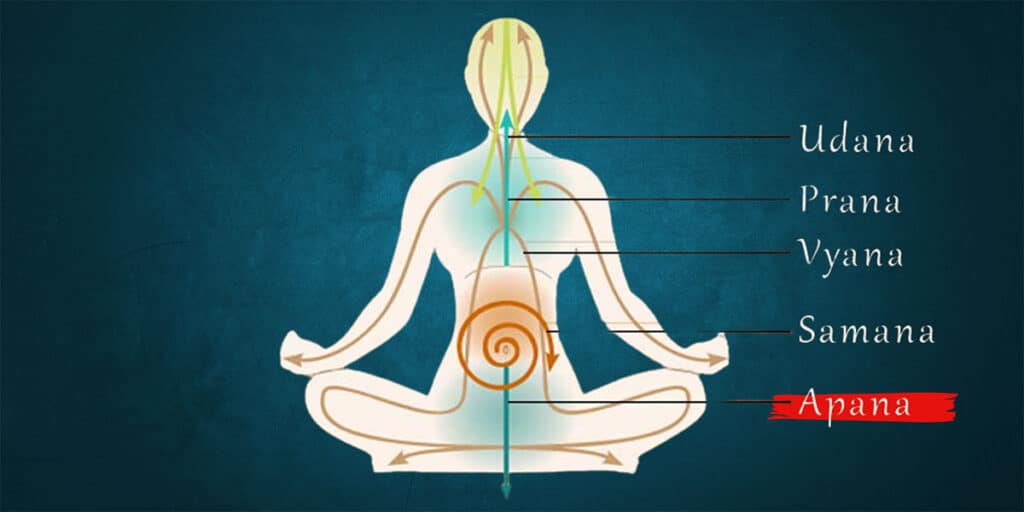
Apana Vayu is one of the five primary subdivisions (Pancha Vayus) of Prana (the vital life force). In Ayurvedic physiology, it is specifically the downward-moving energy and is considered the most important sub-dosha of the Vata dosha. It acts as the body’s primary eliminator, governing the expulsion of all physical and psychological waste.
2. Where It Is (Location)
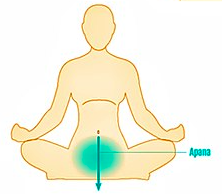
Its primary residence is the pelvic cavity and lower abdomen. Anatomically, it governs the:
-
Large intestine (specifically the descending colon)
-
Urinary bladder
-
Reproductive organs (ovaries/uterus in women; testes/prostate in men)
-
Rectum and anus
-
Lower extremities (hips and thighs)
What It Does (Primary Functions)
Apana Vayu is responsible for all downward and outward movements in the body. Its five main actions are:
-
Excretion: Expelling feces, urine, and sweat.
-
Reproduction: Ejaculation of semen and the downward flow of menstrual blood.
-
Childbirth: Facilitating uterine contractions and the delivery of the fetus.
-
Holding: Paradoxically, it holds the fetus in place during pregnancy (when balanced).
-
Vital support: When strong, it anchors the other Vayus, preventing them from floating upward and causing chaos in the head or chest.
-
What Is the Element
-
Elements: Primarily Air (Vayu) + Ether (Akasha), but it operates closely with the Earth (Prithvi) and Water (Apas) elements in the pelvis to give it gravitational “weight” for downward flow.
-
Qualities (Gunas): When balanced, it is stable, heavy, and smooth in its downward pull. When disturbed, it exhibits its excess Vata qualities:
-
Cold (Sheeta)
-
Dry (Ruksha)
-
Rough (Khara)
-
Mobile/erratic (Chala)
-
-
Taste association: It is pacified by Sweet, Sour, and Salty tastes (which are heavy and moist), and aggravated by Bitter, Pungent, and Astringent tastes (which are dry and light).
-
How to Balance It (When Disturbed)
To correct an imbalanced Apana Vayu, the protocol is always: Warm, Moist, Grounding, and Regular.
A) Asanas (Yoga Postures)
Focus on hip-opening, forward-folds, and grounding poses to direct the energy downward and relieve pelvic stagnation.
-
Apanasana (Knee-to-Chest Pose) – excellent for releasing pelvic tension and gas.
-
Malasana (Garland/Squat Pose) – opens the pelvic floor and encourages natural downward pressure.
-
Paschimottanasana (Seated Forward Fold) – calms the nervous system and compresses the lower abdomen.
-
Balasana (Child’s Pose) – grounds the energy and soothes the lower back.
-
Supta Baddha Konasana (Reclining Butterfly) – relaxes the groin and reproductive organs.
-
Avoid: Excessive backbends, high-impact cardio, or jerky movements, as these aggravate the mobile nature of Apana.
B) Breathing (Pranayama)
The goal is to lengthen the exhale to encourage the downward flow and calm the erratic movement.
-
Deep Diaphragmatic Breathing (with a 1:2 ratio – Inhale for 4 counts, Exhale for 8 counts). Place your hands on your lower belly to feel the breath moving down.
-
Nadi Shodhana (Alternate Nostril Breathing) – balances the entire nervous system, grounding Apana.
-
Bhramari (Humming Bee Breath) – creates a soothing vibration that stabilizes the pelvic region.
-
Practice Mula Bandha (Root Lock) gently after exhalation to draw Apana upward temporarily to stabilize it, then release to let it flow down.
C) Foods (Dietary Protocol)
Eat warm, cooked, unctuous (oily), and heavy foods to counteract the cold and dry qualities.
-
Include: Warm soups and stews, root vegetables (carrots, sweet potatoes, beets), rice, well-cooked oats, ghee, whole milk, and soaked nuts (almonds/walnuts).
-
Spices: Generously use digestive, warming spices like Ginger, Cumin, Fennel, Asafoetida (Hing), and Black Pepper. These ignite the digestive fire (Agni) that pushes Apana downward.
-
Avoid: Cold drinks, raw salads, dried fruits, crackers, carbonated beverages, and gas-producing beans (like chickpeas and kidney beans) as they worsen Vata’s dry/rough qualities.
-
Hydration: Sip warm water or ginger tea frequently throughout the day, rather than gulping large amounts of cold water.
D) Other Essential Requirements (Lifestyle & Therapies)
-
Do NOT suppress natural urges: This is the most critical rule. Never hold in the urge to urinate, defecate, pass gas, sneeze, or yawn. Suppression is the primary cause of Apana vitiation.
-
Daily Routine (Dinacharya): Establish fixed times for eating, sleeping, and elimination. Irregularity aggravates Apana.
-
Warm Oil Massage (Abhyanga): Daily self-massage with warm Sesame Oil (or Mahanarayan oil) on the lower abdomen, lower back, groin, and feet. Massage in clockwise circles around the navel to stimulate the colon.
-
Herbal Support (Classical Ayurveda): Medicines like Dashamoola (a blend of ten roots) or Triphala (for gentle bowel regulation) are commonly prescribed, but only take these under an Ayurvedic practitioner’s guidance.
-
Warm Water Enema (Basti): In Ayurveda, Basti (medicated enema) is considered the king of treatments for Vata and Apana imbalances. A therapeutic enema with warm sesame oil directly pacifies Apana in its seat (the colon).
-
Mental Grounding: Practice mindfulness and avoid excessive mental multitasking, anxiety, or rushing, as the mind directly follows the flow of Apana.
-
-
